Pharmapod: The Trusted Solution for Pharmacy Compliance Across Canada

Map of Canada with Canada flag in the middle

One cloud-based platform. Every province. Complete confidence.

New provincial mandates are reshaping how community pharmacies across Canada approach continuous quality improvement (CQI) and medication incident reporting. Pharmacies need more than a reporting system; they need a partner.

That’s where Pharmapod comes in.

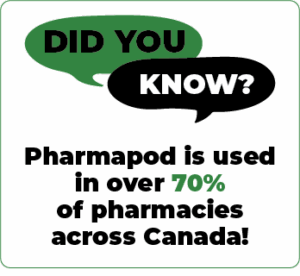
Used by over 70% of pharmacies in Canada, Pharmapod is the leading CQI and incident management platform, built by pharmacists, for pharmacists. Whether you’re operating in Western, Central, or Eastern Canada, we’re fully aligned with your province’s reporting requirements, so you can focus on what matters: safer patient care.

A Nationally Recognized Platform, Trusted from Coast to Coast

Pharmapod is fully compliant with all major provincial programs, including:

British Columbia: CIRCL

Compliance deadline: June 1, 2026

Requirement: Community pharmacies must participate in CIRCL (Community Incident Reporting for Continuous Learning), a comprehensive medication incident reporting program designed to enhance medication safety in pharmacies across British Columbia.

How Pharmapod Helps:

  • CIRCL-compatible incident reporting and tracking.
  • Anonymous reporting that contributes to national learning.
  • Built-in Pharmacy Safety Self-Assessments (PSSA).
  • PSSA standalone option for pharmacies with proprietary reporting systems
  • CQI meeting tools with templates and reporting features.

Alberta: CQI+

Compliance deadline: February 1, 2026

Requirement: All community pharmacies must implement CQI+ as mandated by the Alberta College of Pharmacy (ACP). Pharmapod helps you establish a structured continuous quality improvement (CQI) program to identify and address risks by reporting incidents and close calls, analyzing root causes, and implementing SMART action plans to prevent future incidents. 

How Pharmapod Helps:

  • Approved CQI+ vendor.
  • Anonymous reporting with step-by-step guidance to ensure all details are captured.
  • CQI meeting tools with templates and reporting features.

Saskatchewan: COMPASS

Compliance deadline: 2018

Requirement: Participation in the COMPASS (Community Pharmacy Professionals Advancing Safety in Saskatchewan) program is required for community pharmacies.

How Pharmapod Helps:

  • Pre-built tools aligned with COMPASS, including Medication Safety Self-Assessment (MSSA) tools and improvement tracking.
  • CQI meeting tools with templates and reporting features.

Manitoba: Safety IQ

Compliance deadline: 2021

Requirement: Pharmacies are encouraged to use Safety IQ, a standardized CQI framework focused on good catches and medication errors.

How Pharmapod Helps:

  • Standardized templates for all Safety IQ reporting.
  • Track trends and facilitate regular team discussions with safety summaries.
  • Anonymous reporting that contributes to national learning.
  • Built-in Pharmacy Safety Self-Assessments (PSSA).
  • CQI meeting tools with templates and reporting features.

Ontario: AIMS Program

Compliance deadline: 2017

Requirement: Mandatory participation in AIMS (Assurance and Improvement in Medication Safety) is required for all community pharmacies.

How Pharmapod Helps:

  • Seamless integration with AIMS for incident documentation and CQI tracking.
  • Direct data submission to ISMP Canada.
  • Anonymous reporting that contributes to national learning.
  • Built-in Pharmacy Safety Self-Assessments (PSSA).
  • CQI meeting tools with templates and reporting features.

Quebec

Requirement: Currently, the Ordre des pharmaciens du Québec (OPQ) has not published a requirement for community pharmacies to submit incident or near-miss reports; however, participating in broader safety and CQI initiatives remains a best practice, even when not mandatory to use a digital platform. 

How Pharmapod Helps:

  • Enables voluntary accident  and good catch reporting to support internal safety improvements
  • FARPOPQ fields built in
  • Offers CQI tools, including Root Cause Analysis  and action plan tracking
  • Available in French and English


New Brunswick: MMIR

Compliance deadline: 2018

Requirement: The New Brunswick College of Pharmacists (NBCP) has implemented a Mandatory Medication Incident Reporting (MMIR) directive, requiring community pharmacies to submit de-identified medication incidents and near misses to an external database.

How Pharmapod helps: 

  • Anonymous reporting that contributes to national learning.
  • Built-in Pharmacy Safety Self-Assessments (PSSA).
  • CQI meeting tools with templates and reporting features.
  • Direct data submission to ISMP Canada.


Nova Scotia

Compliance deadline: 2010

Requirement: Since 2010, the Nova Scotia College of Pharmacists has mandated that every community pharmacy must anonymously submit all quality-related events (including errors and good catches) via the CPhIR system.

How Pharmapod helps: 

  • Anonymous reporting that contributes to national learning.
  • Built-in Pharmacy Safety Self-Assessments (PSSA).
  • CQI meeting tools with templates and reporting features.
  • Direct data submission to ISMP Canada.

Prince Edward Island

Compliance deadline: 2023

Requirement: PEI also participates in the CPhIR program, which mandates that community pharmacies submit de-identified incident and near-miss data directly to the NIDR as part of its safety initiative.

How Pharmapod Helps:

  • Anonymous reporting that contributes to national learning.
  • Track trends and facilitate regular team discussions with safety summaries.
  • Built-in Pharmacy Safety Self-Assessments (PSSA).
  • Direct data submission to ISMP Canada.

Newfoundland and Labrador: MedSTEP NL

Compliance deadline: 2024

Requirement: All community pharmacies must participate in the MedSTEP NL program, which includes elements of reporting, analyzing, documenting, and sharing learning from medication incidents and near-miss events to improve the quality and safety of pharmacy practice in the province.  

How Pharmapod Helps:

  • Simplified medication error and good catch reporting with comprehensive dashboards that make it easy to drill down into the root cause of process problems.
  • Self-assessments and documentation for audit-readiness.
  • Anonymous reporting that contributes to national learning.
  • Built-in Pharmacy Safety Self-Assessments (PSSA).
  • Team meetings template

Why Pharmacies Across Canada Choose Pharmapod

Pharmapod contributes anonymous incident data to the National Incident Data Repository (NIDR), part of the Canadian Medication Incident Reporting and Prevention System (CMIRPS). This national collaboration, led by ISMP Canada, helps create shared learning and supports a safer, more informed healthcare system. Our platform also offers a number of additional advantages, including:

Meet Compliance Requirements, Easily

Pharmapod ensures you’re aligned with your province’s specific regulations. With standardized reporting templates, province-specific tools, and built-in CQI workflows, compliance is simple, consistent, and auditable.

Streamline Medication Incident Reporting

Quickly and accurately report medication errors and good catches. Pharmapod helps you document incidents the moment they happen—before details are lost—while staying compliant with your jurisdiction’s requirements.

Actionable Insights

Pharmapod’s analytics dashboard offers powerful data visualizations, trend tracking, and KPI comparisons across timeframes, locations, or teams. Spot safety risks early and target improvement strategies with confidence.

Support a Culture of Safety

Use Pharmapod’s built-in tools to hold effective CQI staff meetings, generate “Safety Reports” in seconds, assign and monitor action plans, and reinforce shared accountability across your team.

Be Audit-Ready, Always

With digital recordkeeping, smart documentation templates, and role-based access controls, Pharmapod makes it easy to stay organized and prepared for audits or reviews in minutes. 

Built for Your Pharmacy, No Matter Where You Practice

From large chains to independent community pharmacies, Pharmapod scales to your needs. Whether you’re in urban centres or rural communities, managing one site or multiple, Pharmapod is built to help you enhance safety, reduce risks, and save time, all while staying compliant with provincial pharmacy standards.

Ready to Future-Proof Your Pharmacy?

Book your personalized demo and discover how Pharmapod can help your pharmacy simplify compliance, support your team, and improve safety, no matter where you practice in Canada. Book your free, no-commitment demo now.

5 Ways to Strengthen Your Pharmacy’s Incident Reporting 

Smiling female pharmacists leaning on counter

In today’s fast-paced pharmacy environment, effective incident reporting plays a crucial role in enhancing patient safety and ensuring compliance with regulatory standards. But even the most well-meaning teams can fall into patterns that limit the impact of their reporting efforts.

Here are five common missed opportunities around incident reporting and how you and your team can avoid them.

1. Don’t Just Report Major Incidents — Capture the Small Stuff Too

The missed opportunity:
Many teams only document major incidents, like dispensing the wrong medication or dosage.

Why it matters:
Smaller issues, including good catches, workflow gaps, or recurring documentation gaps, are often early warning signs of bigger problems, and they often result in duplicate work. Reporting them helps prevent bigger events before they happen.

What to do:
Foster a ‘no blame’, or Just Culture that encourages reporting of all incidents, including good catches. Tools like Pharmapod make it easy to record events and track trends before they become bigger problems.

2. Log Events in Real Time – Don’t Delay Reporting Events Until It’s More Convenient

The missed opportunity:
Busy pharmacy teams often put off reporting until the end of the day or the end of the week.

Why it matters:
Details fade with time. Delays in reporting can result in missed insights, incomplete documentation, and lost learning opportunities.

What to do:
Encourage staff to take a few minutes to start a report while details are fresh. Pharmapod allows you to save your reports as drafts, so you can add pertinent details right away and return later to complete them. 

3. Share What You Learn

The missed opportunity:
Reports are filed, but team members never hear about what went wrong or what changes were made as a result.

Why it matters:
Incident reporting isn’t just about documenting; it’s about learning. Without follow-up, your team loses trust in the system and misses opportunities to improve.

How to avoid it:
Make incident reviews a regular part of continuous quality improvement (CQI) staff meetings. Engage your team in collaborative problem-solving, and be sure to acknowledge every step taken toward safer practice. Use the “Safety Report” feature in Pharmapod to organize all events over a period of time in under a minute for your meetings. Import visuals from the Charts portion of Insights Pro to make the meetings more valuable.

4. Use Your Data to Track Trends

The missed opportunity:
Incidents are logged, but no one is analyzing the data or looking for patterns.

Why it matters:
Without analysis, repeated issues can go unnoticed and unchecked. Data is one of your most powerful safety tools—if you use it.

What to do:
Use built-in analytics tools to track recurring errors, identify root causes, and measure improvements. Pharmapod dashboards provide visual insights that make it easy to spot trends at a glance. 

For example, if your data reveals a spike in prescribing errors on Saturday mornings, a deeper dive might show that patients discharged from the hospital Friday evenings are driving a surge in workload the next day. With this insight, you can proactively adjust staffing to better manage the demand and reduce the risk of error.

5. Make Reporting a Driver of Change, Not Just a Checklist

The missed opportunity:
Some teams report incidents because they have to, not because they see the value. When incident reporting is treated as a task instead of a valuable tool, its full value is lost.

Why it matters:
True impact comes from a culture that sees reporting as a way to learn, grow, and protect both patients and staff.

What to do:
Reinforce the purpose behind reporting. Celebrate wins, like preventing a repeat error or making a good catch, and remind your team how their efforts directly contribute to better care and a stronger safety culture.

Start Small, Think Big

Incident reporting isn’t about perfection; it’s about progress. Providing your team with the right tools and encouraging them to regularly report all incidents and good catches can help drive significant safety improvements in your pharmacy.

Pharmapod makes it easier.
As the global leader in pharmacy incident reporting, Pharmapod helps pharmacies streamline reporting, spot trends, and build a true culture of safety.

Learn more about how Pharmapod can transform safety in your pharmacy. Contact us today for a demo. 

Sarah’s Journey with Pharmapod: A Story of Enhanced Pharmacy Practice

When Sarah, a community pharmacy manager, first heard about Pharmapod, she thought it might be just another tool to learn. Another login. Another checklist. Another “solution” that added more work than it solved.

But what she got wasn’t just new software, it was a turning point.

From Reporting Burden to Built-In Workflow

Before Pharmapod, incident reporting in Sarah’s pharmacy meant paper forms, inconsistent details, and far too many follow-ups. It was something the team delayed, partly out of fear, but mostly because it was a time-consuming hassle.

Pharmapod changed that.

Incident and good catch reporting became part of the daily workflow, not a separate chore.

Customizable digital forms walked staff through the process, capturing the required information quickly, confidently, and consistently.

No more paper chasing. No more guessing what to include.

Building a Just Culture, One Report at a Time

As reporting got easier, something else shifted: the culture.

Sarah used Pharmapod to reinforce a Just Culture, where reporting wasn’t about blame, but about learning. Staff felt safe flagging issues and good catches, knowing the focus was on improving care, not pointing fingers.

And with that came trust, transparency, and a steady flow of valuable insights.

From Data to Decisions: Spotting the Patterns

The real turning point? Pharmapod’s analytics dashboard.

Within weeks, Sarah could see patterns she’d never noticed before:

  • A spike in prescribing errors on busy Monday mornings
  • Dispensing challenges tied to specific drug classes
  • Repeated near misses caused by small process gaps

Insights that were once buried were now clear, actionable, and available in real-time. She wasn’t just logging events anymore, she was preventing them.

When Compliance Feels Effortless

Regulatory audits used to send Sarah into scramble mode. Now? She’s ready with a few clicks.

Pharmapod automatically generates clean, comprehensive audit reports, complete with incident history, resolution steps, and trend data.

With Pharmapod, Sarah’s data is documented, organized, and ready to go!

The Ripple Effect: Stronger Team. Safer Pharmacy.

With less time spent on admin, Sarah’s team had more time for patients. They saw how their reports led to real changes, and that boosted morale.

It wasn’t just about reporting anymore. It was about making care safer and working better together.

Ready to See What Pharmapod Can Do for Your Pharmacy?

If you see yourself in Sarah, it’s time to consider Pharmapod.

No matter your pharmacy’s needs, Pharmapod adapts to your workflow, simplifies compliance, and supports real improvement in patient safety. 

Getting Started

Already a Pharmapod member? Log in today and start reporting.

Not yet a member? Contact us today for a demo and discover why Pharmapod is the medication incident reporting tool of choice used in over 70% of pharmacies across Canada. 

Avoid the Blame Game: How to Effectively Handle Medication Incidents in Pharmacies

Pregnant customer at pharmacy counter with two pharmacists reviewing her medication

Medication safety is at the heart of every pharmacy’s mission, yet errors and near misses, or “good catches,” still occur. These incidents can have serious consequences—not only for patients but also for the pharmacy team. While tackling these issues is no small task, one thing is clear: playing the blame game only makes the situation worse.

Fear of repercussions is one of the main reasons pharmacy workers don’t report medication errors. This culture of fear prevents the whole pharmacy team from learning important lessons that could stop similar incidents in the future. But there’s a better way. By fostering a just culture that focuses on learning, not punishing, we can transform medication errors into opportunities for growth and safer practices. This blog explores how to build that culture and effectively handle medication incidents.

What is a “Just Culture” in the Pharmacy Setting?

A just culture is an approach to workplace accountability that balances fairness and responsibility. Instead of immediately pointing fingers when errors happen, a just culture seeks to understand why the mistake occurred. It recognizes that most errors result from system failures rather than individual negligence.

Key principles of a just culture include:

  • Learning over Blaming: Mistakes are seen as opportunities to improve processes and identify systemic issues.
  • Fair Accountability: While reckless behaviour is addressed, actions are evaluated based on intent, not just outcomes.
  • Psychological Safety: Employees feel safe to report errors and near misses without fear of punishment, fostering open communication.

Adopting a just culture can ensure that medication incidents lead to better risk management, rather than contributing to workplace stress and fear.

Why Fear Holds Pharmacies Back

Fear of repercussions is a significant barrier to progress in many pharmacies. Employees might hesitate to report errors for reasons such as:

  • Fear of Losing Their Job: Many pharmacy workers worry that even a minor mistake could result in termination.
  • Reputation Concerns: Employees fear judgment from colleagues or supervisors if they admit to mistakes.
  • Past Experiences: If a pharmacy has a history of harsh punishment for errors, this legacy can discourage honest communication.

This fear-based culture not only prevents errors from being reported but also creates an environment where similar mistakes are likely to occur, putting both patients and employees at greater risk.

Shifting the Focus to Learning

Transitioning from a blame culture to a just culture requires intentional steps. Here’s how pharmacies can approach this shift:

1. Foster Open Communication

Create an environment where employees feel comfortable discussing errors and good catches. Regularly emphasize that reporting incidents is not about punishment but about protecting patients and improving outcomes.

  • Use anonymous reporting tools that allow workers to report errors without fear of identification.
  • Hold regular staff meetings to review medication incidents in a way that focuses on solutions rather than fault.
  • Provide feedback on what was learned from the trends, how reports led to improvements, and reward those who are reporting events into the Pharmapod platform

2. Analyze the System, Not Just the Incident

Most mistakes stem from systemic problems, not individual failures. When an error occurs, take a step back and ask:

  • Were there unclear or outdated procedures? (e.g., storage of cold chain products)
  • Was the workload too high or unmanageable? (e.g., duplicating work unnecessarily)
  • Were employees adequately trained on relevant processes? (e.g., new medications  or new technologies) 

Using root cause analysis (RCA) can help identify underlying issues that contribute to errors, like a flaw in automation systems or storage mismanagement.

3. Reward Good Catches

Celebrate moments when team members proactively identify potential issues before they escalate. Positive reinforcement demonstrates that vigilance and problem-solving are valued.

For example:

  • During team meetings, recognize employees who spot and stop potential errors. (e.g., Good catches of duplicate drugs or missing drugs  while checking compliance packages)
  • Implement an incentive program where reporting good catches earns points or rewards. (e.g., free coffee for the most good catch events per week)

4. Establish Clear Accountability

A just culture doesn’t eliminate accountability; instead, it ensures fairness by distinguishing between human error, at-risk behaviour, and reckless behaviour. Address each scenario with appropriate responses:

  • Human error (e.g., an honest mistake): Use coaching and system improvements.
  • At-risk behaviour (e.g., cutting corners): Provide training to reinforce best practices.
  • Reckless behaviour (e.g., a willful disregard for safety): Address this firmly with formal actions.

Consistency in how incidents are handled reinforces trust in the system.

5. Promote Collaboration

Encourage teamwork to solve problems together as a pharmacy unit. When the focus shifts away from blame, employees are empowered to collaborate on identifying patterns and creating preventative solutions.

Building a Safer, More Supportive Pharmacy Environment

Handling medication incidents effectively requires a cultural shift. By creating a just culture rooted in fairness, learning, and collaboration, pharmacies can address errors in a way that prioritizes safety, fosters trust, and prevents future mistakes.

Remember, mistakes don’t define employees, but how your pharmacy responds to mistakes will define the kind of culture you build.

Take the First Step

Is your pharmacy ready to move past the blame game? Start by holding a team meeting to discuss the importance of open communication and include everyone in the process of creating a safer, just culture. The improvements you make today could transform your pharmacy for years to come.

Ready to take the next step in improving pharmacy safety? Discover how Pharmapod makes it easy for your team to report medication errors and good catches, learn from mistakes, and implement process improvements. Contact us today for a demo. 

Report That Good Catch! Why Every Near-Miss Matters in Pharmacy Practice

Male pharmacist discussing medication with elderly patient.

Pharmacists and pharmacy workers play a crucial role in safeguarding patient health, ensuring medications are dispensed accurately, and preventing errors. Among these efforts, one action often doesn’t get the recognition it deserves — reporting good catches.

Good catch reporting is just as vital as reporting medication errors themselves. It provides an invaluable opportunity to improve medication safety, identify patterns, and prevent issues before they happen. But far too many good catches go unnoticed, unacknowledged, and unreported.

What Is a “Good Catch”?

A good catch (also called a close call) is a situation where a potential medication error is noticed and stopped before it reaches the patient. Essentially, it’s a near-miss prevented through vigilance. Think of it as a heroic save, where a small action protects against what could have been a significant threat to patient safety.

However, despite their importance, good catches are often underreported. Many pharmacies experience at least one reportable good catch every week, but without proper documentation, these near-misses don’t translate to meaningful changes.

Why Reporting Good Catches Is Critical

You might wonder—if the error didn’t reach the patient, is it really worth reporting? The answer is a resounding yes, and here’s why:

  • Preventing Future Errors: A good catch caught today could be a fully developed error tomorrow. Without a report, there’s no data to analyze and act on to prevent similar mistakes from recurring.
  • Spotting Patterns: Systemic issues often manifest as repeated good catches. Documenting these events can spotlight flaws in workflows or technology that need addressing.
  • Enhancing Patient Safety: Reporting good catches is a proactive way to protect patients in the long run. It’s not just fixing mistakes; it’s improving the system.

Without records, the next occurrence may not be caught in time. Reporting your good catches ensures that every opportunity to strengthen the safety net isn’t missed.

Examples of Good Catches Worth Reporting

Here are just a few examples of good catches that can have a significant impact. Each of these scenarios illustrates a moment where your alertness can prevent harm — and reporting these incidents ensures that your vigilance benefits the entire pharmacy system.

Wrong Medication Detected: Spotting a prescription mistakenly filled with the wrong drug due to a selection error.

Incorrect Dosage Identified: Catching a dosage that’s too high or too low based on the patient’s medical history or age.

Allergy Alert: Identifying a prescribed medication that a patient is allergic to before it’s dispensed.

Drug Interaction Flagged: Preventing a dangerous interaction between a new prescription and the patient’s current medications.

Pediatric or Geriatric Dosing Error Prevented: Correcting a pediatric dose that would have been too strong or adjusting a geriatric dose to avoid adverse side effects.

Duplicate Therapy Caught: Stopping a prescription that would have introduced duplicate treatment, potentially leading to overmedication.

Look-Alike/Sound-Alike Medication Error Avoided: Preventing a mix-up between two medications with similar names or packaging.

Overcoming the Barriers to Reporting

We understand reporting good catches can feel tedious or unnecessary, especially when strapped for time. But this small step can make a monumental difference in the long run. When good catches go unreported, pharmacies lose opportunities to strengthen safety measures.

Here are some tips to streamline the process:

  1. Use Pharmapod – Reporting in Pharmapod ensures all necessary information is captured, making reporting and root cause analysis quick and easy. 
  2. Foster a Team Culture – Encourage open communication and emphasize the importance of patient safety, so reporting good catches becomes second nature. 
  3. Acknowledge Reports – Celebrate your team’s good catches to reinforce the value of diligence.

Learn more about how Pharmapod can simplify good catch and medication incident reporting. Contact us today for a demo!

Already a Pharmapod user? Log in today and report your good catches.

Could Documentation Prevent the Next Medication Error?

Female pharmacist at counter talking to elderly male patient

Pharmacies today are busier than ever, and with time at a premium, it’s easy to overlook or downplay the importance of thorough medication error and good catch reporting. In fact, a recent report estimated that only 14% of medication errors and good catches are reported. This underreporting means we’re missing out on valuable data that is crucial to improving patient safety. It also leaves room for recurring errors that could result in possible patient harm.

If your pharmacy isn’t reporting at least five good catches or incidents every month, chances are, you’re underreporting. Learn more about the risks of underreporting, and common scenarios where reporting can make a big difference. 

The Risks of Underreporting

Each unreported incident is a missed opportunity to identify patterns that could lead to errors. Understanding the root causes of these incidents is necessary to implement processes that can prevent them in the future.

Consistently documenting errors and good catches helps create a comprehensive record of potential issues within your pharmacy operations. By analyzing this data, you can pinpoint what led to an error and take proactive steps to prevent similar situations from occurring again. Sharing what you have learned helps others working in your location. The aggregated de-identified can be shared with others across the country as well.

Examples of Missed Reporting Opportunities

If you’re not sure where to start, here are four examples of missed opportunities to report. 

1. A common example of a good catch is spotting and correcting a prescriber’s dosing error, for example, an incorrect antibiotic dose for an infant. It might feel like it’s not worth reporting since you caught it in time, or it’s simply part of your job. But without documentation, there’s no record to prevent the next occurrence⸺what if that one isn’t caught in time?

2. You discover an elderly patient is not taking blood pressure medication correctly and is at risk of either a stroke or falling due to hypotension. Do you simply correct them or document HOW this misunderstanding occurred? Was this due to something during the patient education process when the prescription was new or renewed that could be improved?

3. You speak with a patient who stopped taking her prednisone abruptly without tapering the dose. You discover that she picked up a new prednisone prescription for a cough, and despite the flag on the bag to ensure the pharmacist spoke to her, she was given the medication without a consultation about the proper way to take it or the potential side effects.  She was unnecessarily put at risk of adrenal crisis, a life-threatening state.  How can this be prevented in the future?

4. A patient picks up their prescription for Lamisil (a medication for toe fungus). However, due to similar-sounding names, they’re mistakenly given Lamictal (a medication to treat epilepsy or bipolar disorder). The prescriber chose the wrong one in the system drop-down. Unaware of the difference, the patient takes the medication and experiences blurred and double vision along with unsteadiness, a side effect of Lamictal. How can look-alike, sound-alike errors be prevented in the future?

How to Get Started with Reporting

If this all seems overwhelming, start small. Encourage your staff to take a few minutes to report in Pharmapod, even if it feels like a routine part of the job. Regularly review the collected data and discuss findings in team meetings to foster a culture of transparency and continuous improvement.

Effective reporting is not meant to add burden to an already busy workload; it’s about enhancing patient safety. By taking a few moments to document errors and good catches, you can safeguard your patients and strengthen your pharmacy’s operations. Start today and make a meaningful impact on patient safety.

Learn more about how you can foster an environment where staff feel safe reporting all medication errors and good catches.  Catch up on episode 3 of our Safety Series webinars today!